

Social Transitions: Current Projects
The research project "Food Coalitions Beyond the Local Scale: Spaces for a Democratic Sustainability Transformation" (short: Trans-Local Food Coalitions) explores alternative models of commodity chains that seek to address the challenges of globalization. Using alternative global food chains as an example, it aims to identify the opportunities and limitations of food chains that directly connect producers and consumers. It specifically seeks to understand to what extent and how alternative food chains strengthen democratic and sustainability values. In addition to producing novel scientific insights, the project provides practically relevant knowledge that is shared with practitioners.
The project is a collaboration between researchers from BOKU University Vienna, the University of Basel and the Centre for Technology and Society at TU Berlin. It is funded by the Austrian Science Fund (FWF), the Swiss National Science Foundation (SNSF) and the German Research Foundation (DFG). The project started in fall 2024 and runs for three years.
Responsible Persons: Manfred Max Bergman, Basil Bornemann, Antonia Kaiser.
Timeline: 2024-2027
Funded by: Swiss National Science Foundation (SNSF), the German Research Foundation (DFG), and the Austrian Science Fund (FWF)
This project undertakes an interdisciplinary study on sustainable Christian agricultural initiatives (SCAIs) in the USA. It analyses the potential of SCAIs to pioneer sustainability transitions in an agricultural sector dependent on pesticides and fossil fuels, and a rural landscape dealing with Farmageddon – a tripolar decline that is at once socio-economic, environmental, and religious. The research uncovers the values and worldviews which underpin SCAIs, and how SCAIs contribute towards regenerative practices such as reducing the environmental impact of agriculture, tackling local poverty, and combatting community breakdown. A three-phase exploratory sequential mixed methods design is being employed: Telephone interviews with SCAIs from different regions in the US are being followed by in depth instrumental case studies of Bethlehem Farm, West Virginia and Hungry World Farm, Illinois. Finally, an online survey of SCAIs in the USA is being conducted. The results will provide an overview of how SCAIs are attempting to (re)shape American agriculture from the bottom up, shedding light on the role of religion in responding to complex environmental crises. Such insights, if reapplied more widely by religious institutions and policymakers could help to catalyze a shift in the US agricultural sector towards a more sustainable paradigm that better considers the interests of the environment and rural populations.
Responsible Person: Julius Malin
Timeline: 2023-2026
Funded by: Swiss National Science Foundation
Website: https://data.snf.ch/grants/grant/218920
Internationally, many sustainability programs have emerged. Yet, most lack a key feature: providing robust training in solving sustainability challenges to satisfy increasing labor market demands for graduates who can competently support the sustainability transformations in areas like energy, mobility, or food systems.
Thus, we propose to assess the potential for developing a competency-based and solutions-oriented sustainability program as a joint degree program in Eucor. Past experiences show that laying such groundwork and building relationships is critical for the success of such a program. The application consortium includes the University of Freiburg, KIT, the University of Basel, and the University of Strasbourg.
Responsible Persons: Manfred Max Bergman, Zinette Bergman, Marc Frick, Arthur Hemmings
Timeline: 2025-2026
Funded by: Eucor - The European Campus
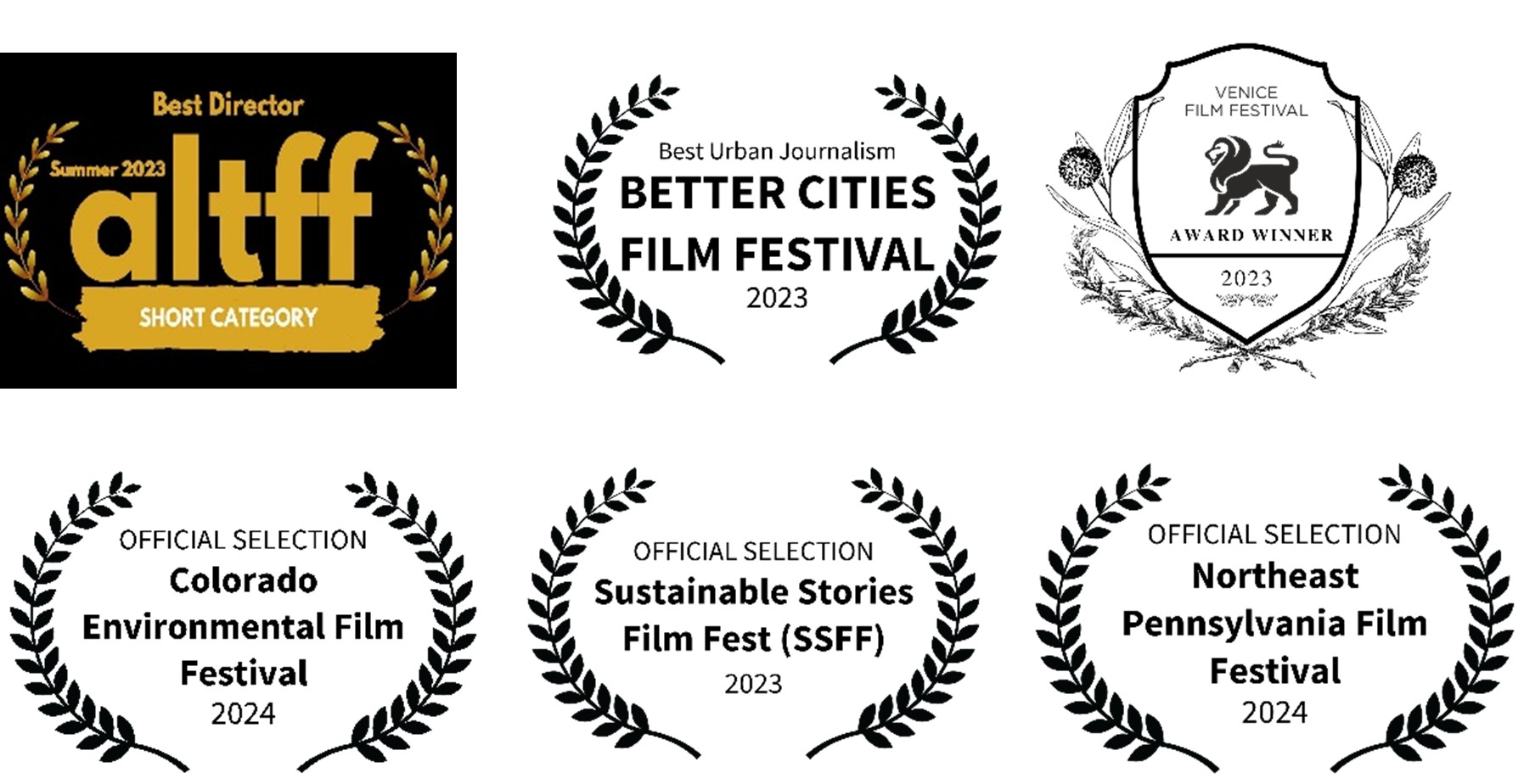
Awards won by the proTract Pittsburgh Film
Responsible Persons: Manfred Max Bergman, Zinette Bergman
What if, despite advances in science and innovation, the way we traditionally do research is simply not fast or flexible enough for the urgency of today’s challenges? What if the solutions we need are not waiting to be invented, but already exist, scattered across small projects, community efforts, and everyday practices that rarely enter mainstream debates or applications? Across the world, residents, local organisations, businesses, and informal networks may be doing things that improve social, economic, and ecological outcomes, often without calling it “sustainability”. Almost like the opposite of greenwashing.
Could systematically studying these real-world examples reveal solutions that are fundable because they are already funded, acceptable because they have already been accepted, and effective because they are already working?
Within the framework of the Proof of Transition Concepts (proTract) research program, we investigate real-world and often unexpected examples of successful sustainability transitions. These positive cases show how public, private, and civil society actors, despite divergent interests, collaborate in ways that yield socially, economically, and ecologically positive outcomes. Over time, and through the study of many positive cases, our aim is not only to understand how transitions occur but to provide actionable and replicable insights across different contexts, and revisit sustainability theories that may be compelling in principle but difficult to put into practice.
Recent publications:
Bergman, Z., Pine, J., Lee, T., Bornemann, B., Allenspach, N., & Bergman, M.M. (submitted). Governance-Driven Sustainability Transitions: A Case Study of Mobility, Public Space, and Adaptive Urbanism in South Bend, Indiana. Sustainability: Science, Practice and Policy.
Bergman, Z., Chen, Z., Bound, H., & Bergman, M.M. (2025). The Future is Now: An Analysis of Three Innovative Adult Education Approaches in Singapore. International Journal of Teaching and Case Studies, 15(1). DOI: 10.1504/IJTCS.2024.10065388
Bergman, Z., Allenspach, N., & Bergman, M.M. (2024). A tale of two Divvy’s: A case study of Chicago’s Bike Sharing System. Sustainability,16(5), 2146. DOI: 10.3390/su16052146
Bergman, Z. & Bergman, M.M. (2022). Toward Sustainable Communities: A Case Study of the Eastern Market in Detroit. Sustainability, 14(7): 4187. DOI: 10.3390/su14074187
Films:
- Indo-Swiss Sustainability Short Film Festival (with ICSSR)
- proTract Pittsburgh
Quick Links